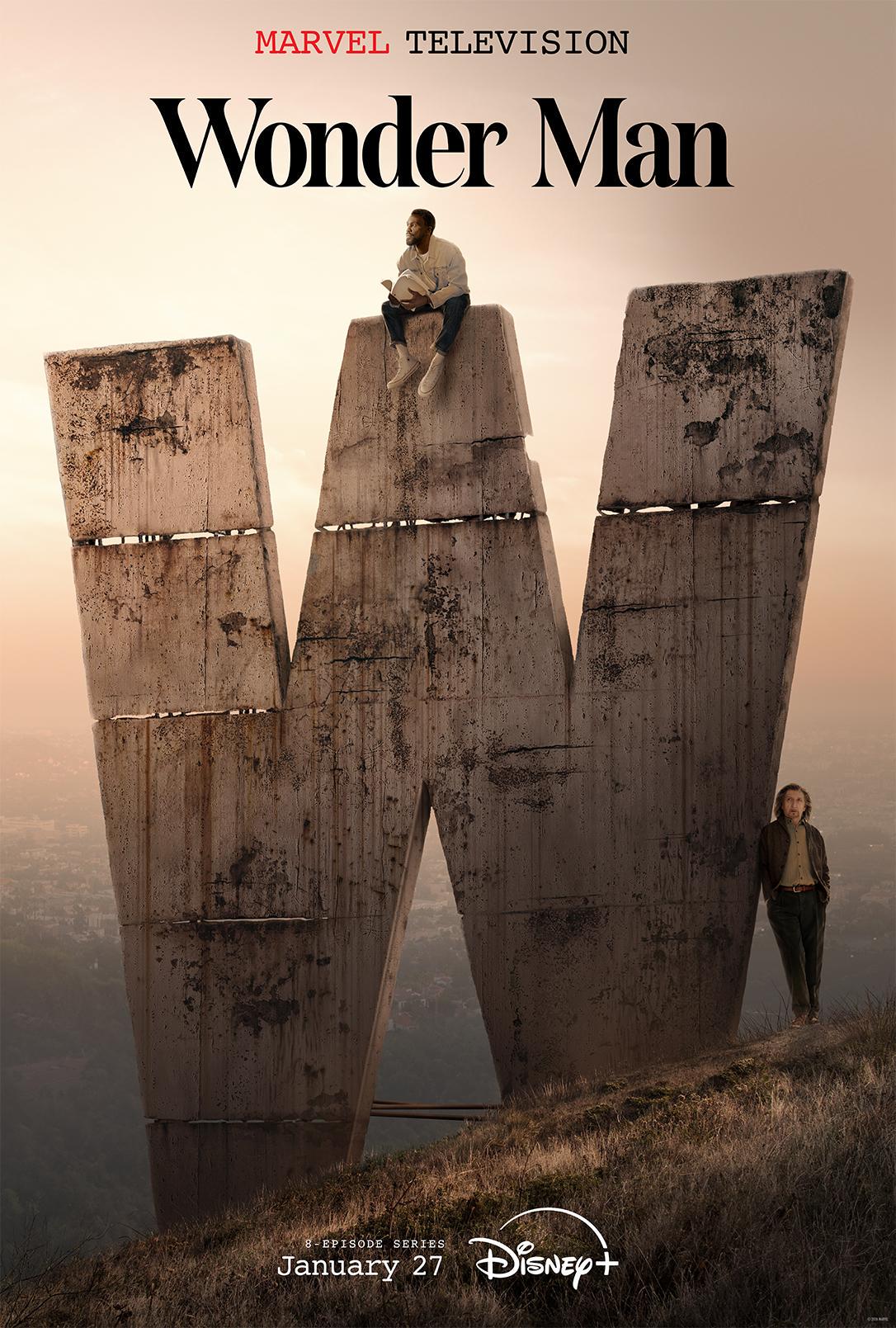
While recent Marvel series have leaned into expanding the universe and chasing spectacle, Wonder Man takes the opposite path. It plays less like a superhero show and more like a dry satire about Hollywood as a system — what it costs the people inside it. And the punch sitting at the end of all that dryness lands harder than the climax of most blockbusters.
The smartest choice in the show is the casting. Ben Kingsley, an actual Oscar winner, plays Trevor Slattery — a struggling actor still circling the edges of Hollywood, hauling himself to one audition after another. The meta gesture of an Oscar-winning actor performing a no-name actor’s desperation is, in itself, the show’s emotional thesis stated in one move.
The scene I keep coming back to is the audition waiting room with Simon, the newcomer. There’s something strange about watching a celebrated actor inhabit the small terror of a no-name fighting for one role, and the strangeness keeps pointing back at the nobility of acting itself. Trevor is always a little off, a little untethered — but underneath, you can sense the spy’s old anxieties tangled up with an actor’s pride. Kingsley layers those two things inside a single, quiet performance.
The show’s overall register sits low and steady. If you come in expecting MCU pacing, parts of it will feel almost too plain — the rhythm is closer to a slice of Hollywood life than a hero arc. But that calm is engineered. It’s a build-up, every long quiet beat earning the final turn. By spending its time on the daily attrition of being a working actor, the show gets viewers to drift into the characters before they realize it. The space that’s normally taken up by action is filled, instead, by two actors carrying the room.
The moment that actually got me was the ending. Simon walks off after destroying the set with his powers, and Trevor stays behind alone. What he does next is what lifts the whole show into something else. A man who has spent a lifetime running from anything resembling a crisis pulls the Mandarin mask back on — for his friend.
Going on television to falsely confess that he committed the attack is more than self-sacrifice. It’s the persona that once destroyed him, repurposed — weaponized — to save Simon. The fake mask that ruined his life becomes the most honest choice he’s ever made. An old actor knowingly putting on the costume of a villain so that someone else can have a future as a hero — that close-up on Kingsley’s face does more than any final battle scene I can remember. Through the Mandarin’s unhinged voice, his eyes carry a quiet, undivided friendship.
I think Wonder Man is, in the end, a show about what makes a person a hero. Not the man with the powers, but the old actor with no powers at all who throws his life into a performance for someone else’s sake — that’s the greatest superpower the show puts on screen. The man who knows fakeness best is the one who arrives at the most honest act available to him. That paradox is what the final scene compresses, perfectly.
If the MCU is asking itself where to go next, Wonder Man offers a small, quiet answer: what shines brighter than the suit, eventually, is the sincerity of the person inside it.