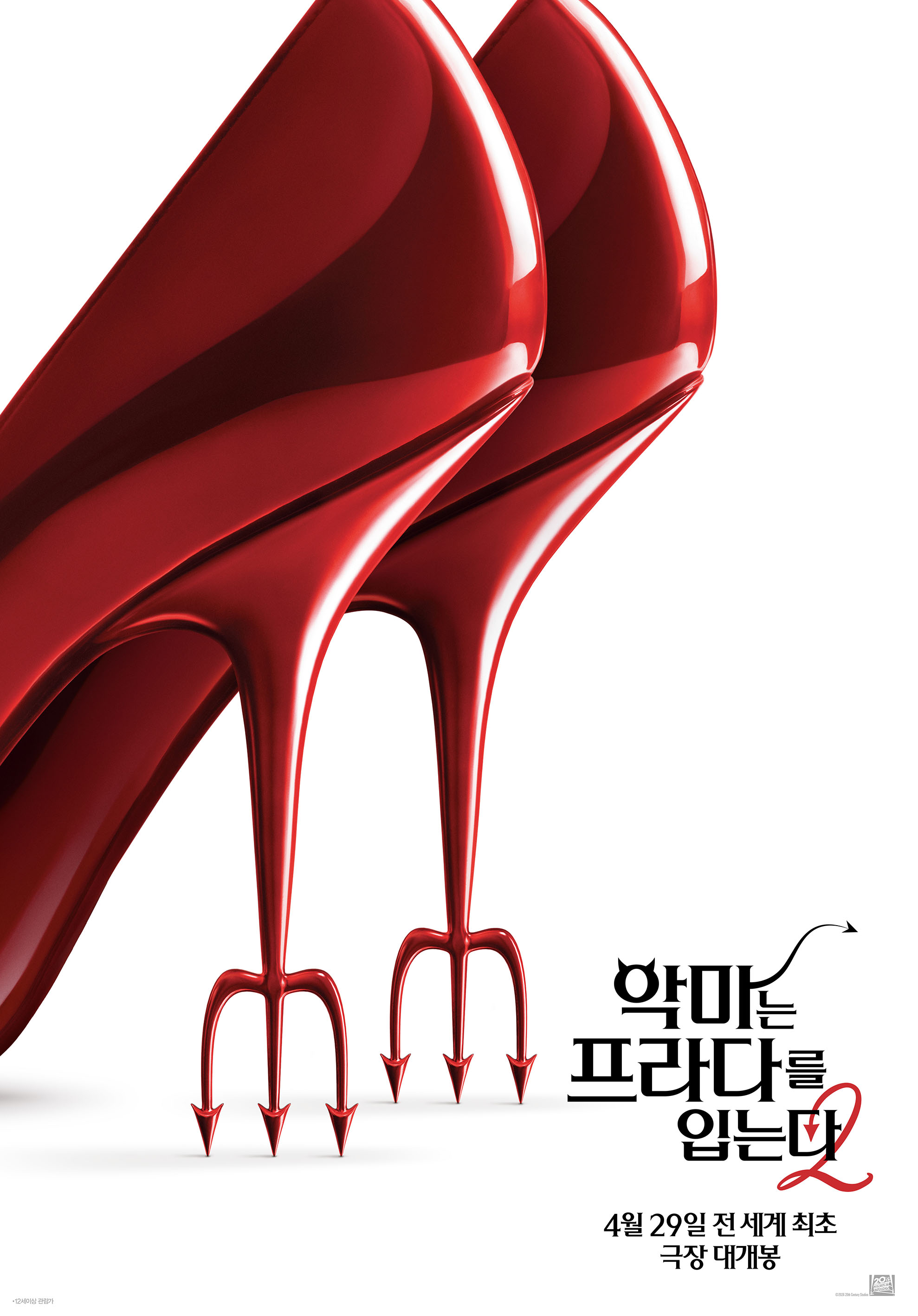
Released in 2026, The Devil Wears Prada 2 is set exactly twenty years after the first film. Andy, by now a veteran journalist, learns from the awards stage — mid-acceptance speech — that her entire team has just been laid off; the remarks she throws from the podium make her famous overnight, even as they leave her suddenly unemployed. Around the same time, Runway’s Miranda is mired in a public-relations crisis, and the search for someone who can clean it up ends, of all places, with Andy being brought in as her new editor. The age of the print magazine is essentially over and every piece of content is now measured in algorithms and click-through rates — and so, in a 2026 office, the two of them face each other again, twenty years on.
The strongest impression I came away with from the film wasn’t the film itself so much as what it held up about the past twenty years. Same industry, same characters, and yet 2006 and 2026 read like almost different planets. To the film’s credit, it doesn’t try to soften the gap with nostalgia; it makes a clear effort to look squarely at how much has changed.
The most immediately legible shift is in Miranda’s weight. The Miranda of the first film was an absolute power no one approached lightly — someone who could, with a sentence, make or unmake a person. The Miranda of 2026 picks her words even inside her own conference room. The moment a sharp line begins to leave her mouth, the assistant beside her cuts in with “that one’s risky” — a single beat that compresses how charismatic top-down power gets systematically dismantled now that PC and Gen-Z values are baked into the requirements of leadership. And it isn’t only what she says. A scene in which Miranda hangs her own clothes on a rack in the office — the kind of task an assistant would have absorbed in the first film — quietly shows that the system propping her up has thinned out as well.
The change isn’t confined to one person. The bigger shift sits underneath, in the industry itself. Andy’s awards-stage moment — the same hand reaching for a trophy as the layoff text arrives — compresses an entire era’s mood, the wave of mass layoffs that swept the United States, into a single image. On top of that, the magazine industry has changed beneath their feet. The print magazines treated as something almost sacred in the first film are now mostly downloaded online, and content is judged first by clicks and metrics. The whole environment, where serious writing struggles to survive, plays under the film like a soundtrack. I felt these tableaux as the film’s most direct nod to viewers who grew up on the first one — people now somewhere in their thirties or forties, exhausted from holding down their own corner of all this.
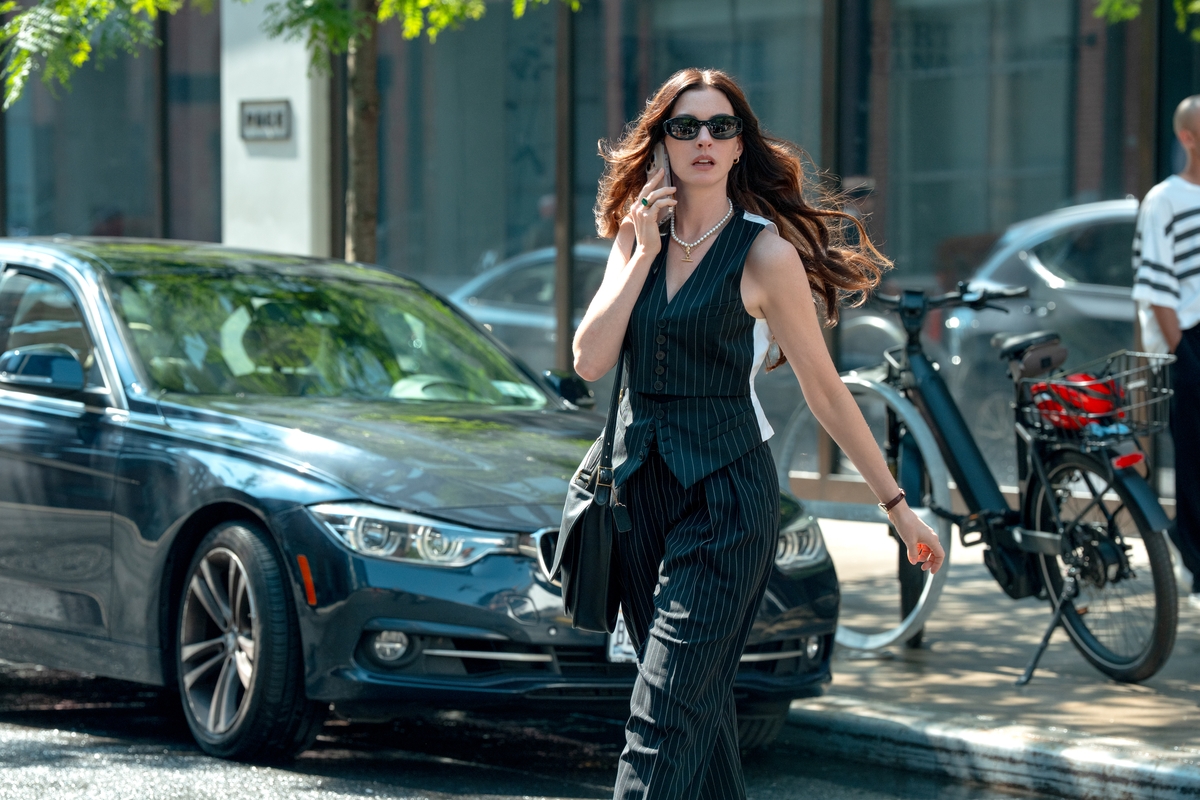
Wardrobe makes the change of era unusually legible too. The first film built tension out of perfectly tailored, tightly cut silhouettes — flamboyant clothes worn with a kind of disciplined poise. The 2026 frame is almost the opposite: looser, more comfortable cuts, with color polarized into either bold primaries or affectless monochrome, with little in between. A single frame quietly declares the lifestyle of right now — comfort over flair, the extremities of personal expression and pragmatism over restraint.
Miranda’s heartfelt apology to Nigel, and the meal Emily and Andy share as equals, both come across as belated attempts to set right, by today’s PC sensibilities, the rough relationships the first film threw out into the open.
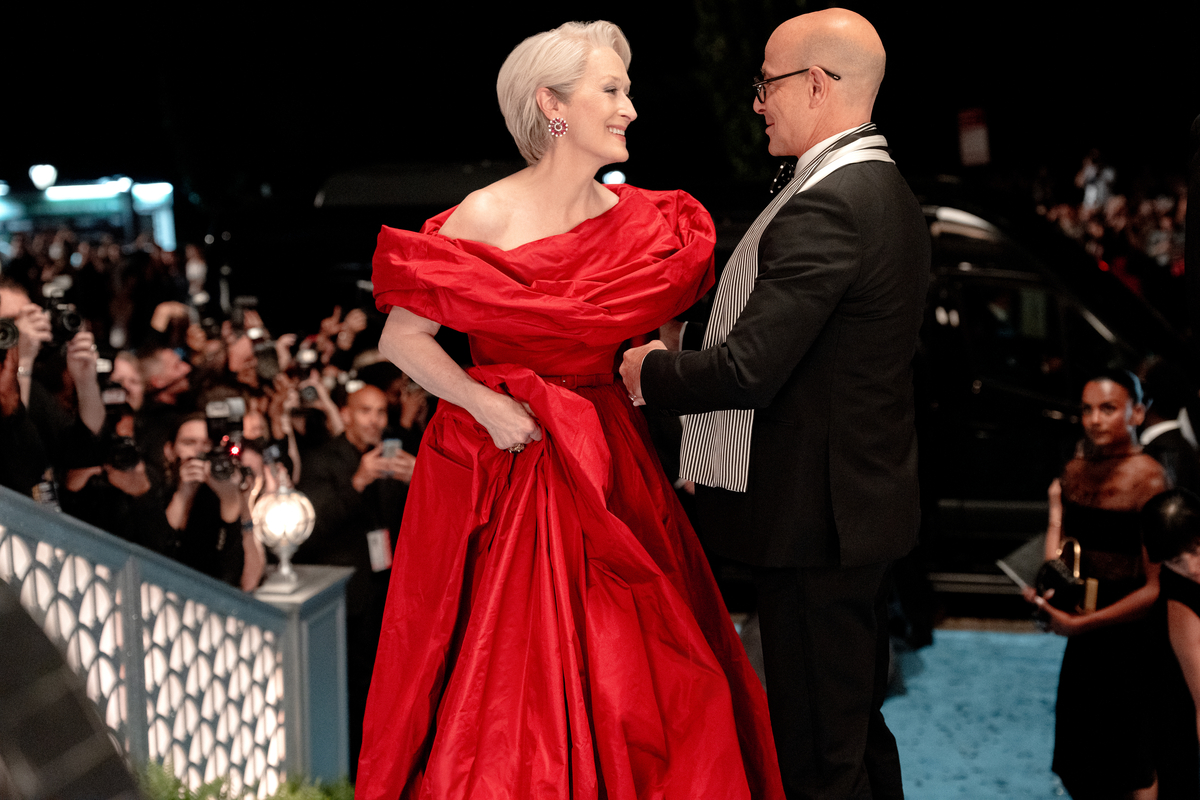
The two scenes work in slightly different ways. Miranda’s apology softens, in human terms, what was a one-directional power dynamic in the first film. The dinner with Andy and Emily, by contrast, takes the very hierarchy of the first film — Andy as protagonist and Emily as the supporting character envying her — and reshuffles it by lifting Emily up to the equal position of friend. The grain is a little different, but both are unmistakably PC corrections. The intent is understandable. But the cost of those corrections — the way they shaved at the texture of the characters themselves — stayed with me too. What made the first film what it was wasn’t kindness; once the thorns are filed off, the people on screen are softer, but they’re also blurrier.
The plausibility I struggled with the most was on Andy’s side. Watching a journalist successful enough to be standing on an awards stage revert to nervous-intern energy in front of Miranda — eager to please her again — gives the impression of rewinding a character’s clock. Someone with twenty years behind her would carry a certain weight of her own when she sits down across from Miranda; that weight was not visible on the Andy of this film. I’d have rather seen the two of them meeting on level ground — the passage of time this sequel set out to mark would have lived more clearly inside the characters themselves.
The bigger weakness is probably that what the film is trying to protect never quite comes into focus. AI, layoffs, PC, repaired relationships — there’s a lot the film wants to fold into two hours, and the flow fragments here and there. Stories that might have breathed in a season of television move past too quickly inside the running time. The film keeps suggesting, in atmosphere, that some essential thing remains unchanged across all this turnover, but it never lands the single moment that shows you, in one image, what that thing actually is.
The final scene, when Andy walks in wearing the cerulean blue sweater, honestly left me with something close to the same impression.
In the first film that color was the symbol of the moment Miranda first broke Andy down — and the picture of the same color reclaimed twenty years later carries undeniable weight. Still, the moment played less like the natural arrival of a character and more like fan service for those who remember the first film. There needed to be something accumulated inside the character to earn pulling the cerulean blue back out, and that something hadn’t quite gathered yet — the sweater arrived first, and the awkwardness was in the gap.
What stayed with me most after walking out wasn’t the message the film intended; it was a single recognition. That a long time had passed. That the rush and freshness of watching the first film for the first time doesn’t come back the same way. That, just as time has stacked up on the actors’ faces, I’ve grown too, and the world has changed alongside both. A faint sadness — but a sadness, all the same — followed me out of the theater.
Looking at it that way, I think I can begin to see why this sequel arrived now of all times. The film seems to want to call up the world of the first one more time and, in the same gesture, smooth over the parts that felt natural then but no longer quite fit today’s sensibility — to do it before any more time goes by, before the first film ends up remembered in only one other way. Drawing this picture once more, against the clock — perhaps that is why the sequel turned up at exactly this moment.